Movement & balance
Explore sitting, standing and walking with attention to habitual effort. Practice dynamic balance rather than holding a fixed shape.
 Client LoginBook Now
AWARENESS · MOVEMENT · EVERYDAY LIFE
Move with curiosity.
Discover a different way.
Private Alexander Technique lessons with AmSAT-certified teacher Lara Wilde. Learn to notice habitual effort and explore more coordinated movement in the things you do every day.
IN PERSON AT ELEMNTAL WELLNESS · DOWNTOWN SLC
WHAT IS THE ALEXANDER TECHNIQUE?
The Alexander Technique is an educational approach to recognizing habits in how you move and respond.
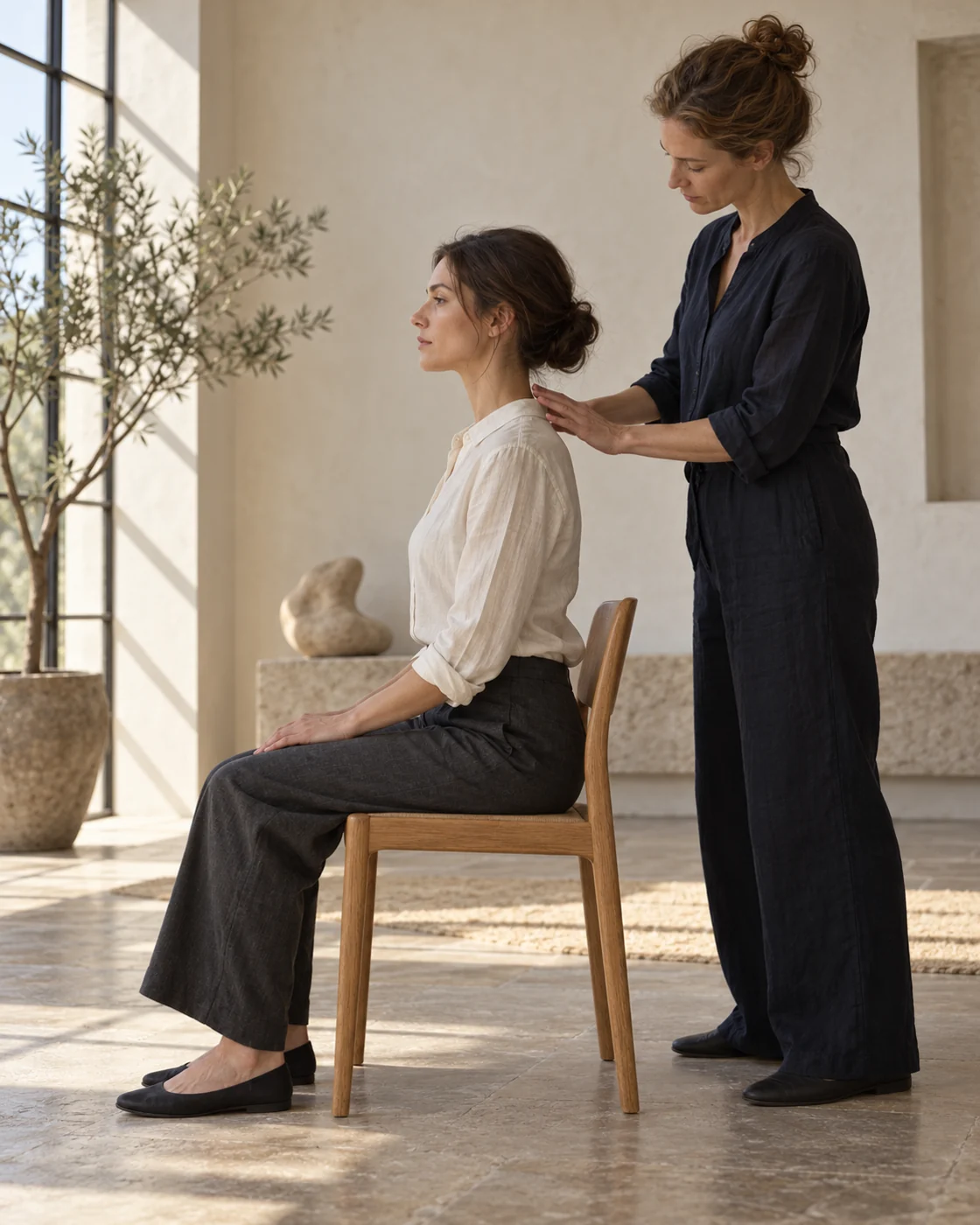
You may tighten your shoulders as you begin speaking, brace before standing or work hard to hold “good posture.” In a private lesson, Lara helps you notice these responses and explore what happens when you do less unnecessary work.
With gentle hands-on contact and verbal guidance, you study the coordination of your head, neck and back through ordinary activities. The work is practical: learning in a chair, while standing or walking, then applying that awareness at a desk, in conversation or during performance.
UNDERSTANDING THE METHOD
The Alexander Technique studies how you organize yourself in activity. A familiar movement can carry habits you no longer notice: lifting your shoulders before typing, shortening your neck as you concentrate or tightening your legs before standing. A lesson helps bring those responses into awareness.
The work involves observation, a pause before a habitual action and guidance toward a different way of moving. A teacher offers verbal instruction and gentle hands-on cues, while you remain an active learner. Your own ordinary movements provide a useful place to begin.
Notice what you do as you prepare for an activity. Familiar effort can feel normal, so a teacher’s observation can help you recognize a pattern you would otherwise overlook.
In this context, inhibition means pausing before following an automatic response. It gives you time to notice the habit without immediately repeating it.
Use a clear intention for how you approach movement, with your teacher’s guidance. You explore coordination while allowing room for the movement to happen.
These ideas become meaningful through experience. A simple action, such as standing up from a chair, gives you repeated opportunities to notice preparation, explore a pause and observe what changes.
SMALL CHANGES IN HOW YOU APPROACH THE EVERYDAY
Lessons explore coordination and choice. There is no ideal posture to force yourself into.
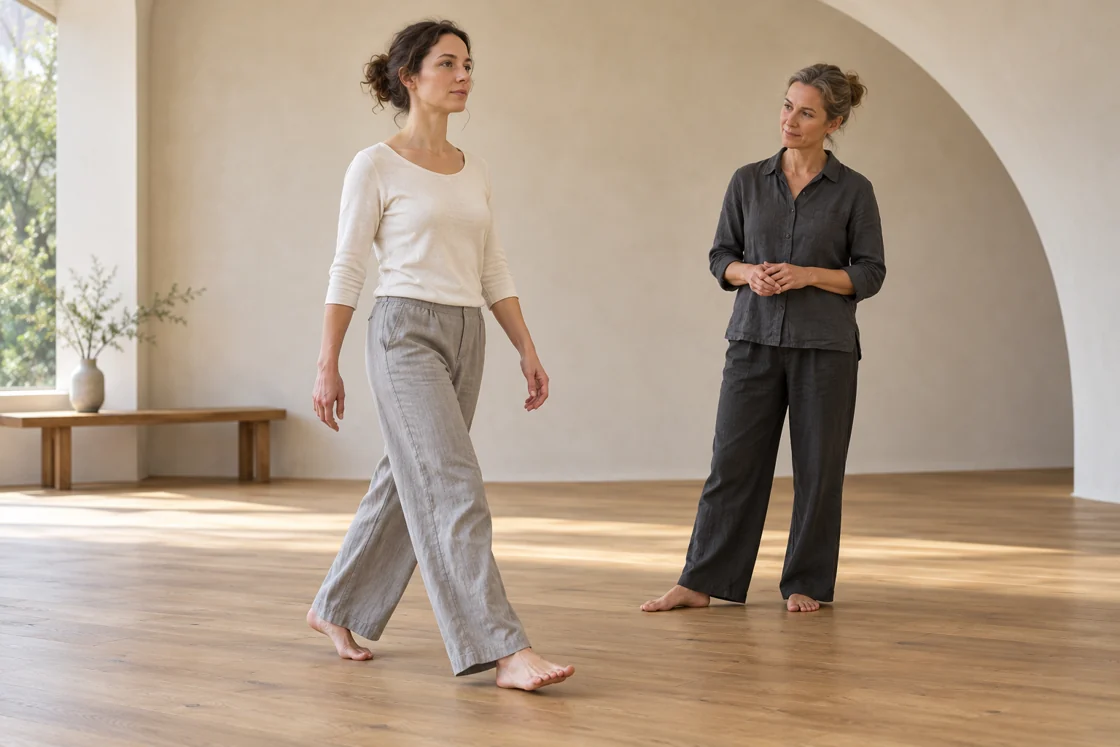
Explore sitting, standing and walking with attention to habitual effort. Practice dynamic balance rather than holding a fixed shape.
Notice when muscles work harder than the task requires. Develop a more informed response to patterns you may not usually feel.
Observe how your overall coordination relates to breathing and speaking. Bring public speaking, music or stage performance into the lesson.
Learn to interrupt an automatic response before a familiar activity. This pause creates space to experiment with a different choice.
Build self-observation skills you can use outside a lesson—in your work, training, creative practice and daily routines.
Athletes, leaders, musicians, actors and dancers can explore the movements specific to their work. Your interests help shape the lesson.
WHY ORDINARY MOVEMENT MATTERS
Working at a desk, speaking to a group, carrying an instrument and taking a walk all involve attention and movement. Habits can travel across those activities. Studying one familiar action gives you an accessible way to examine a pattern that may also appear elsewhere.
A lesson looks at how you balance and coordinate during movement. You may discover that trying to keep your shoulders in a particular place adds effort, or that your usual way of preparing to stand begins with more bracing than the task needs. The inquiry is specific to what you are doing.
Over a course of lessons, you can explore the relationship between your head, neck, back and the rest of your movement. The purpose is to develop more informed choices rather than monitor yourself constantly. Curiosity is more useful than criticism when a familiar pattern reappears.
INSIDE A PRIVATE LESSON
Talk about what brings you in and the activities you want to explore. No previous Alexander Technique experience is needed.
Remain fully clothed while Lara offers verbal instruction and gentle hands-on cues around head, neck and back coordination. Activities may include chair work, standing and walking.
A lesson may also include gentle table work. Discuss how to notice your patterns in everyday life, without turning awareness into another rigid routine.
Alexander Technique is education, not medical treatment, massage, psychotherapy or physical rehabilitation. Lessons do not involve forceful adjustments or promise a cure.
A STANDALONE PRACTICE. A COACHING FOUNDATION.
Book private Alexander Technique lessons on their own, or encounter the work as part of Lara’s high-performance coaching.
Standalone lessons focus on practical movement education and the activities that interest you. A series allows time to revisit patterns, develop awareness and practice with guidance.
In coaching, the same principles connect goals and mindset with what you do in the moment. If you are interested in leadership, communication or performance alongside movement, explore leadership and high-performance coaching.
ALEXANDER TECHNIQUE BENEFITS
People often arrive with an activity they would like to approach with greater ease. The learning goals may include a clearer sense of balance, awareness of unnecessary tension, a more coordinated response or greater independence in recognizing habits. Individual experiences and the pace of learning vary.
Explore how you sit, reach and attend to a screen. Notice what happens as concentration increases and investigate whether you add effort beyond the activity’s demands.
Bring a presentation, a spoken passage or a performance-related movement. Study preparation, breathing and physical presence in the context of something meaningful to you.
Observe how you prepare for an action and organize yourself as you move. The same principles can be explored in walking, standing or an activity relevant to your training.
Learn to recognize a recurring response without immediately judging it. Develop the ability to pause and explore your options when the pattern appears outside a lesson.
You may notice a pattern earlier or find it easier to describe what happens as you move. A familiar task may offer more than one possible approach. You may become less dependent on reminders from your teacher. These observations provide useful material for your next lesson.
The Alexander Technique is an educational practice. Lara’s lessons do not diagnose or treat a condition, and no improvement in pain, injury or a medical condition is promised. The focus here is the learning you can apply to activity.
LEARNING WITH GUIDANCE
A first lesson introduces a way of noticing. A series gives you opportunities to revisit the ideas, ask questions and try them in different contexts. A response that seems clear in a quiet room can be harder to recognize during a busy workday, so follow-up lessons help connect the learning with your actual routines.
Bring a question from a familiar activity to your next appointment: “What do I do just before I speak?” or “When do I start tightening as I use the keyboard?” Discuss with Lara what is useful to observe. The emphasis is on exploring daily activity, with space for the skill to develop.
You remain fully clothed in comfortable everyday clothing. Lara may guide sitting, standing and walking, using gentle contact and verbal cues to help you notice coordination. Some lessons include table work. Ask questions as you go; understanding your own experience is part of the learning.
Lara recommends a 12-session series, generally meeting at least weekly. Your introductory session is 90 minutes and follow-ups are 60 minutes. Discuss individual goals and scheduling with her before choosing a format. Current bookable packages appear in Boulevard; contact Lara directly about individual lessons.
To read more about the wider educational method, explore the American Society for the Alexander Technique. For work that connects this movement foundation with professional goals, explore leadership and high-performance coaching.
THE PERSON BEHIND THE PRACTICE
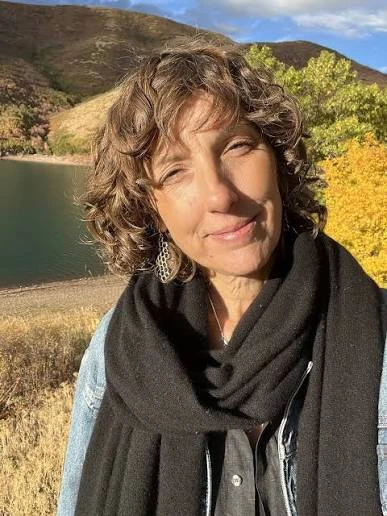
High Performance Coach & Certified Alexander Technique Teacher (AmSAT)
Lara founded Wilde Alliance to help people pursue meaningful goals with more awareness and less unnecessary effort. A former collegiate high jumper and entrepreneur, she brings lived experience of demanding performance environments to her work with leaders, athletes, performers and individuals.
Her approach connects the way you think with the way you move, respond and relate. Sessions invite curiosity about habits that may once have helped you succeed but now leave you working harder than you need to.
YOUR FIRST STEP
Start in person. Build skills you can take into everyday life.
Your introductory session gives Lara time to understand your goals and introduce the work. Follow-up sessions are 60 minutes.
A 12-session series is recommended, generally meeting at least weekly. More frequent sessions or a 30-day immersion can be discussed with Lara.
Complete a brief intake before your first appointment. Wear comfortable, flexible clothes. View currently bookable packages and pricing online. Contact Lara at 385-355-1090 to arrange an individual session.
In-person first. Begin at Elemntal Wellness in Salt Lake City. Remote follow-up is available after completing an initial in-person package or 30-day intensive.
A little preparation. Give at least 24 hours’ notice to cancel or reschedule. Late arrivals finish at the scheduled time.
A LITTLE CLARITY
A few things to know before working with Lara.
No. Alexander Technique is an educational practice focused on awareness and coordination in movement. You remain fully clothed and take an active part in learning; it is not massage or medical treatment.
No prior experience is needed. Wear ordinary comfortable, flexible clothes. Lessons use familiar activities such as sitting, standing and walking.
The work explores dynamic balance and coordination rather than a fixed posture. Lara helps you notice habitual effort and experiment with doing less unnecessary work.
Lara Wilde is an AmSAT-certified Alexander Technique teacher with more than 2,000 hours of teacher training. She trained in developmental movement with Luc Vanier and assists on the Salt Lake City Alexander Technique teacher training course.
An initial session is 90 minutes and follow-ups are 60 minutes. Lara recommends a 12-session series, generally meeting at least weekly. Discuss your goals and scheduling with her.
Yes. Private Alexander Technique lessons are a standalone service. The technique also forms the embodied foundation of Lara’s high-performance coaching.
Lessons combine observation, a pause before habitual action and guidance toward a different approach to movement. You learn through familiar activities with verbal instruction and gentle hands-on cues.
Learning goals can include movement awareness, coordination, dynamic balance, recognition of unnecessary effort and independent self-observation. Experiences vary; lessons do not guarantee medical or personal outcomes.
Discuss useful observations from your daily activities with Lara. Familiar actions can offer opportunities to notice patterns between lessons. Individual instruction helps you understand and apply the ideas without forcing a posture.
New to the method? Read What Is the Alexander Technique? A Practical Guide to Everyday Ease, by Dixon Twamley, for the history, principles and everyday applications.
WILDE ALLIANCE AT ELEMNTAL WELLNESS
Private coaching and Alexander Technique lessons in downtown Salt Lake City, welcoming clients from the Wasatch Front, Davis County, Park City and Utah County.
360 W Broadway, Suite 102The location is wheelchair accessible. Coming from farther away? Contact Lara to discuss an in-person intensive.