MASSAGE SERVICES

A Healing Touch for Body, Mind, and Total Renewal

From Swedish relaxation to Deep Tissue relief, our expert massage therapists tailor every session to your body's needs — helping you relax, heal, and energize from the inside out.

What You’ll Experience

Swedish, Deep Tissue & more

60, 90 & 120 minute sessions

Hot Stones, Bamboo & Cupping add-ons

Massage Services

Relax, heal, and energize with our tailored massage options.

Deep Tissue

Deep Tissue Focused pressure to relieve chronic muscle pain and improve mobility, allowing individuals to regain their strength and functionality in daily activities. This technique not only alleviates discomfort but also enhances flexibility, leading to a more active and fulfilling lifestyle.

$109-$20060, 90, and 120 minutes

Swedish

Gentle strokes to ease tension, improve circulation, and promote relaxation. By incorporating these soothing techniques into your routine, you can enhance your overall well-being, rejuvenate your mind, and restore balance to your body. Embrace the calming effects and let go of stress.

$ $99-20060, 90 and 120 minutes

WHy choose us

Where Nature, Intention, and Care Come Together

Rooted in Nature

Our rituals draw from nature, restoring balance gently.

Mindful by Design

Every experience is intentional, allowing you to be present.

Holistic Balance

We care for your whole being—body, mind, and emotions.

Thoughtfully Curated

Details are chosen with purpose and respect for nature.

Stories of Calm, Balance, and Renewal

Client Experiences

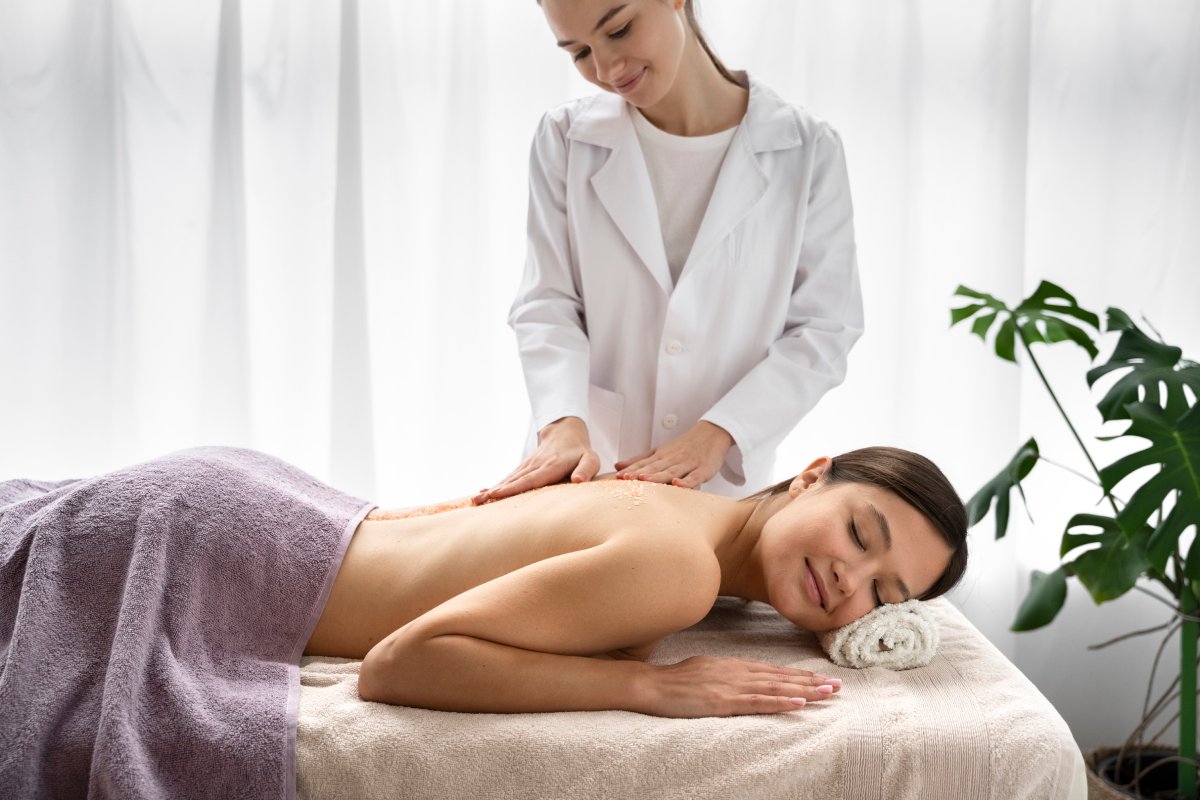
Side view woman getting massaged spa

A truly calming experience. I left feeling lighter, grounded, and deeply refreshed.

Aulia,

Wellness Session

We partner with those who value wellness.

Answers to Your Wellness Questions

Frequently Asked Questions

Deep tissue massage is a therapeutic technique that focuses on the deeper layers of muscle and connective tissue (fascia) using slower, firmer pressure, targeted strokes, friction, and direct manipulation with hands, forearms, elbows, or knuckles. It often involves stripping or breaking up adhesions (“knots”) to release chronic tension, typically in shorter, problem-area sessions or integrated into longer bodywork.

It evolved in the 20th century, building on earlier techniques like those from Swedish massage pioneer Per Henrik Ling (who emphasized friction and pressure in the 1800s). Key developments came from Canadian therapist Therese Pfrimmer in the mid-20th century, who self-treated her paralysis with deep strokes and formalized methods in her 1949 clinic and book Muscles: Your Invisible Bonds. The term “deep tissue massage” gained widespread use in the 1980s as therapists targeted chronic pain and deeper tissues.

Fun facts: It originated partly from self-healing efforts (Pfrimmer’s story is inspirational); it’s more intense than gentler styles, often causing temporary soreness (“good pain”); and while not ancient like some massages, its roots trace to pressure-based traditions in various cultures.

Scientific evidence from RCTs, systematic reviews, and meta-analyses supports several benefits, though evidence quality varies (often low to moderate; more high-quality studies needed):

• Chronic pain relief: Effective for low back pain, neck pain, shoulder issues, fibromyalgia, and musculoskeletal conditions; reduces pain intensity short-term (e.g., comparable to NSAIDs or better than advice in some trials) and improves function/disability.

• Muscle recovery and performance: Aids post-exercise recovery, reduces delayed-onset muscle soreness (DOMS) by ~13%, improves flexibility, and benefits athletes (especially team/strength sports) via better muscle function and reduced tension.

• Other effects: May lower blood pressure/heart rate, enhance range of motion (e.g., in arthritis or injuries), reduce inflammation, support rehabilitation, and promote relaxation/stress reduction (via oxytocin increase, cortisol decrease).

It’s generally safe but can cause temporary soreness; consult a doctor for conditions like injuries or blood clotting issues.

Swedish massage is a popular, gentle form of therapeutic bodywork using long, flowing strokes (effleurage), kneading (petrissage), friction, tapping (tapotement), and vibration. It typically involves oil or lotion on bare skin for smooth gliding, promoting relaxation and circulation in full-body or targeted sessions lasting 60 minutes-2 hours.

It originated in the early 19th century, primarily credited to Swedish physiologist Per Henrik Ling (1776–1839), who developed a system of medical gymnastics and movements to improve health, circulation, and flexibility after healing his own elbow injury through tapping. Dutch physician Johann Georg Mezger later formalized the techniques and introduced French terms for the strokes (e.g., effleurage). Ironically, it’s called “classic massage” in Sweden and Europe, not “Swedish.”

Fun facts: Despite the name, key systematization came from a Dutch practitioner; Ling’s work was more gymnastics-focused; it’s the most widely practiced massage style globally and often the “default” for beginners.

Scientific evidence from systematic reviews, RCTs, and meta-analyses supports benefits, though more high-quality studies are needed:

• Pain relief: Effective for chronic low back pain, neck pain, rheumatoid arthritis, fibromyalgia, and musculoskeletal issues; reduces pain perception and improves function (e.g., systematic reviews show benefits in low back pain and disability).

• Stress and psychological effects: Lowers cortisol, reduces anxiety/depression symptoms, improves mood via increased serotonin/dopamine, and enhances relaxation/well-being.

• Circulation and recovery: Boosts blood/lymph flow, aids muscle recovery, reduces soreness, and supports flexibility/posture.

• Other effects: May help with fatigue in conditions like MS, improve sleep, and provide temporary relief for various pains; often comparable to or better than controls in studies.

It’s generally safe; consult a doctor for medical conditions

Frequency depends on your needs; Scientific studies on the frequency of massage therapy sessions show that benefits often depend on how often you receive them, with cumulative effects building over time from repeated sessions rather than single ones. Evidence comes from RCTs, systematic reviews, and pilot studies, though more large-scale research is needed for definitive guidelines.

A key 2012 RCT (Rapaport et al., Emory University) randomized healthy adults to Swedish massage or light touch once or twice weekly for 5 weeks. Results indicated sustained, cumulative biologic effects persisting days to a week post-session. Weekly massage boosted immune markers (e.g., circulating lymphocytes) and reduced cytokine production with minimal HPA axis impact. Twice-weekly sessions enhanced neuroendocrine benefits, like increased oxytocin, decreased AVP, and lowered cortisol—suggesting higher frequency may better moderate stress hormones.

For chronic neck pain, a 2014 RCT (228 participants) found 60-minute massages multiple times per week (e.g., 2–3 times) more effective than fewer or shorter sessions, with greater improvements in pain and function.

Systematic reviews (e.g., NCCIH summaries) note short-term pain relief and function gains in conditions like knee osteoarthritis (e.g., over 8 weeks), migraines (weekly for 8 weeks), and tension headaches (twice weekly for 6 weeks). A 2024 systematic review of pain-related reviews found moderate-certainty evidence for beneficial pain associations, though frequency/duration varied across studies (e.g., weekly to multiple weekly).

In work stress studies, even short regular sessions (e.g., 15 min weekly or 25 min twice weekly) reduced anxiety and stress, with effects lasting post-treatment.

Overall, more frequent sessions (e.g., 1–3 times/week initially for pain/stress, then tapering to biweekly/monthly for maintenance) appear to amplify and sustain benefits like reduced pain, stress, cortisol, and improved immune/psychological function compared to infrequent or one-off treatments. Individual needs vary; consult a healthcare provider or therapist for personalized advice.

Contact us

Connect With Us to Begin Your Wellness Journey.

Reach out to book your next session or ask about our wellness offerings.

360 W Broadway Suite 102, Salt Lake City, UT 84101 Monday-Saturday 10 A.M. -7:30 P.M. Sunday 8-6:30 P.M.
*Need a little more flexibility? Just give us a call and we’ll work our magic to get you scheduled before or after hours. Your convenience is our priority!